PORTA - Smart Logistics & Truck Management Dashboard
Urban Development Hackathon 2026 · 1st Place
1st-place logistics platform cutting port truck congestion 30-40%, priority permits, AI traffic monitoring, and a real-time operator dashboard wired through a schema I designed and applied end-to-end.
Hackathon build, demo available on request
Key Metrics
Problem
Dammam seaport moves ~1,260 trucks a day. When vessels unload, queues spill into the city, and emergency cargo (medicine, vaccines, perishables) sits behind routine shipments because every truck is treated the same. Operators had no shared view of congestion, no priority policy, and no way to reschedule drivers in real time.
My Role
Team lead and full-stack engineer. I designed the system architecture and API contracts, owned the Next.js frontend (admin dashboard, organisation portal, permit/priority views), built the backend, and wired the AI congestion layer into that backend so detection drives live permit policy in the UI, one loop for operators and drivers, not disconnected demos.
Approach
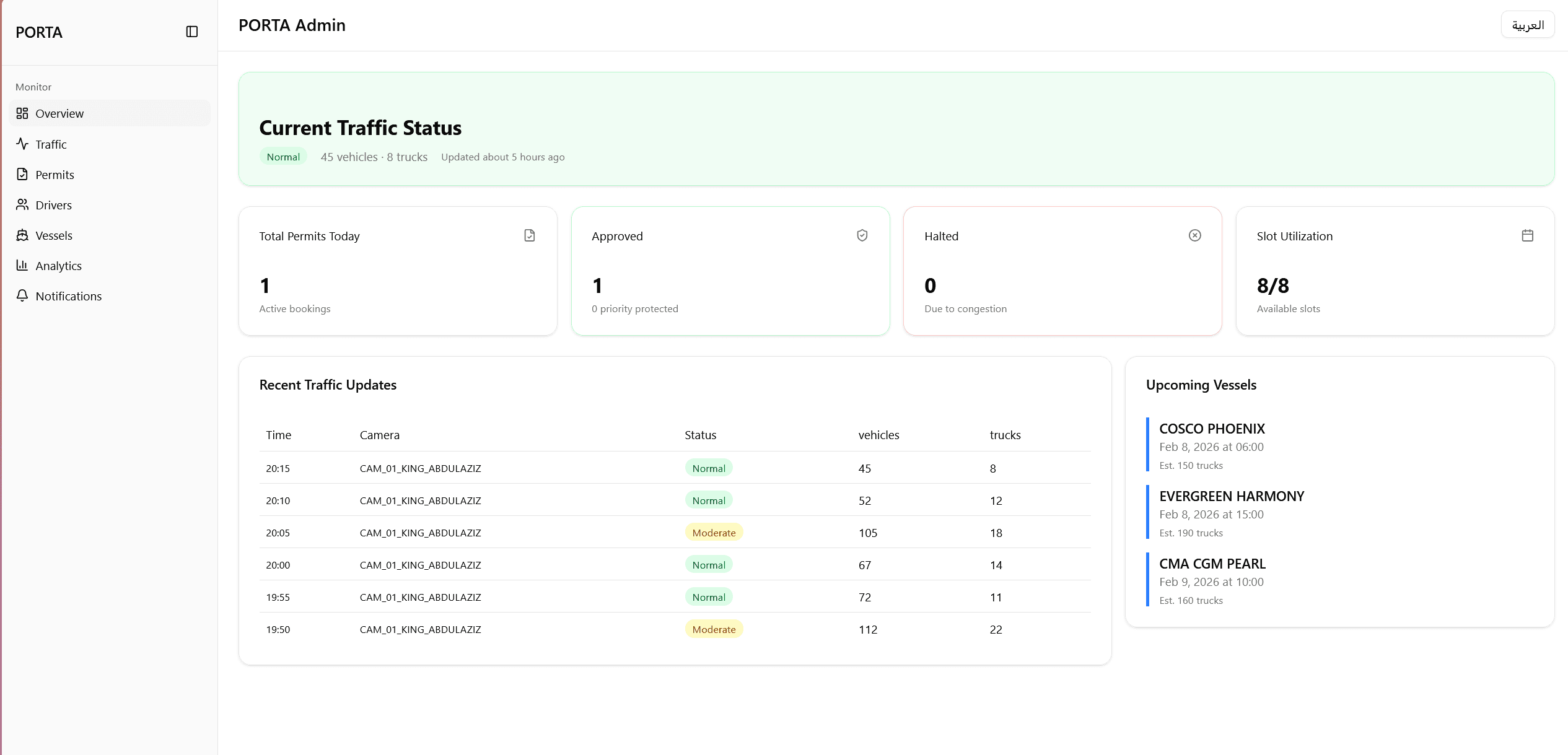
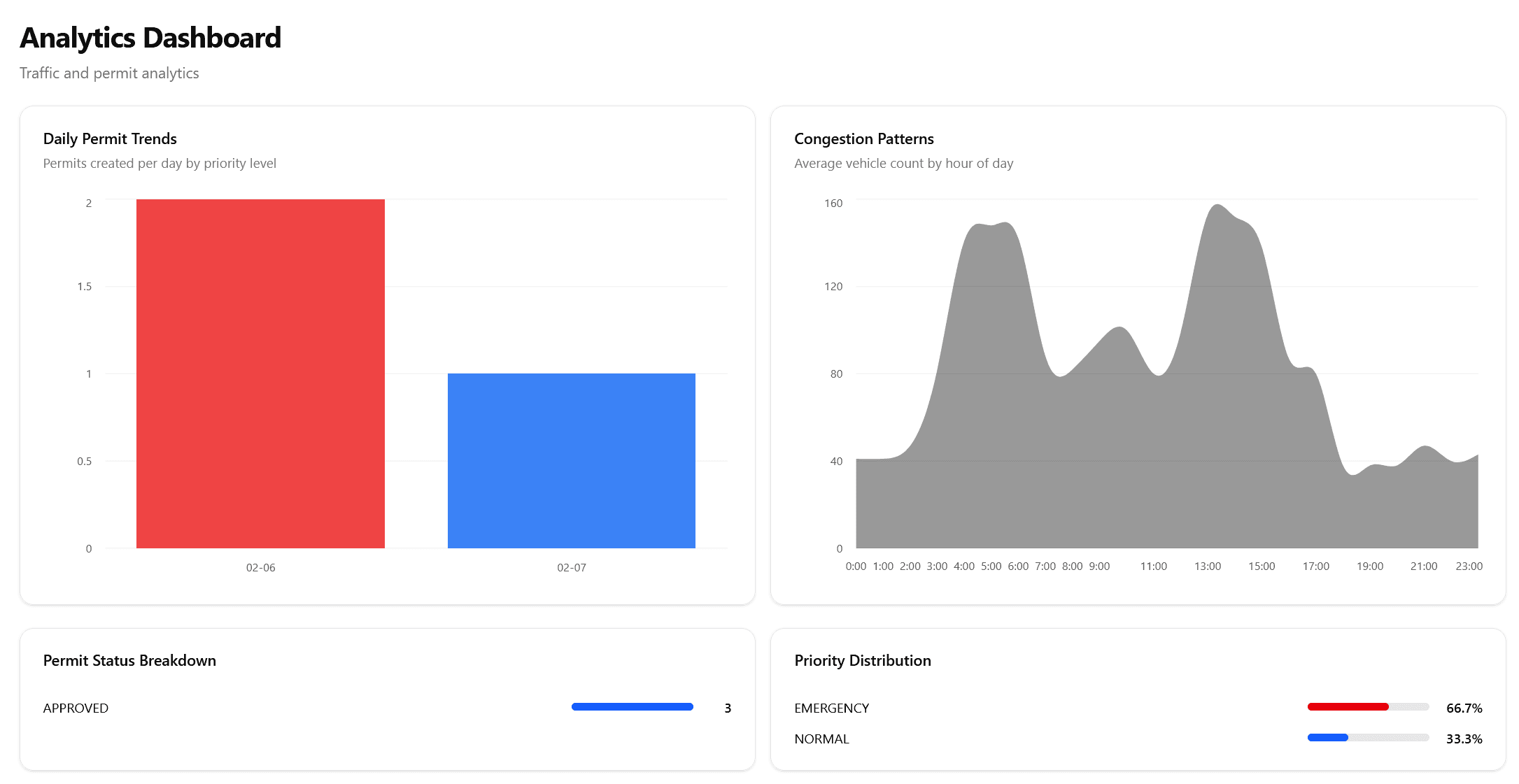
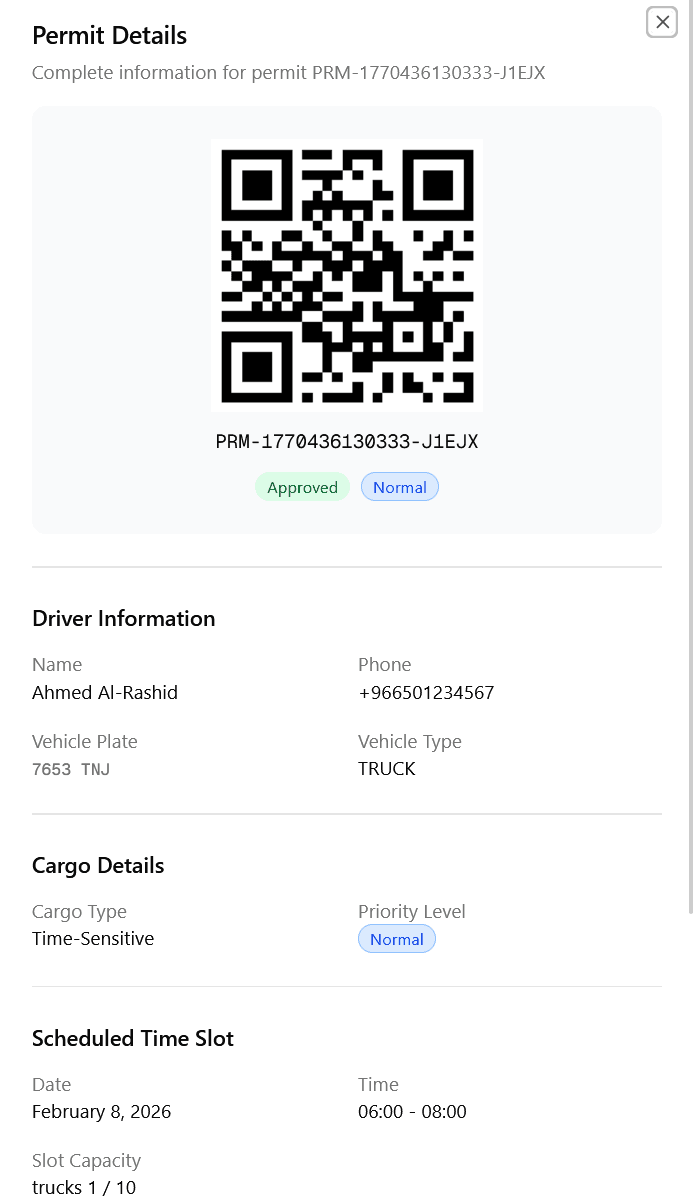
Schema first: model the domain so priority policy is data, not hardcoded UI tricks. YOLO / camera signals feed a congestion input into the backend; when queues cross ~150 vehicles, the API freezes NORMAL/LOW permits while EMERGENCY/ESSENTIAL keep flowing. Drivers get alternate 2-hour slots (10 trucks/slot) instead of dead-ending. The admin app surfaces traffic, QR checks, vessel impact, and bilingual EN/AR controls so operators can run the policy under pressure.
Tradeoffs
Auto-halting lower priorities protects critical cargo but frustrates delayed drivers, so every halt comes with an alternate slot, not a dead end. Camera-based detection is noisy outdoors; we treated it as one input into permit policy, not the only decision. Shipping web + mobile + ML in a hackathon meant prioritizing a correct schema and a working operator loop over polished edge cases.
FIG. 03 · CONTROL LOOP
signals → policy → surfaces
Inputs
Clearance & vessels
Schedules / release events
Road status
Vision count or traffic feed
Cargo priority
Emergency → low tiers
Core
PORTA
Shared schema, API, priority engine, slot scheduler
One model decides who still moves when the corridor is congested. The UI only displays that decision.
Outputs
Operator dashboard
Traffic · vessels · permits
Driver mobile
Window · QR · status alerts
Outcomes
- 1st Place at Urban Development Hackathon 2026, ahead of master's/PhD teams and startups
- Led the team and owned both the backend schema design and the Next.js frontend
- Linked AI congestion detection to live permit policy and the operator UI
- Modeled 30-40% congestion reduction with 98% on-time for critical cargo